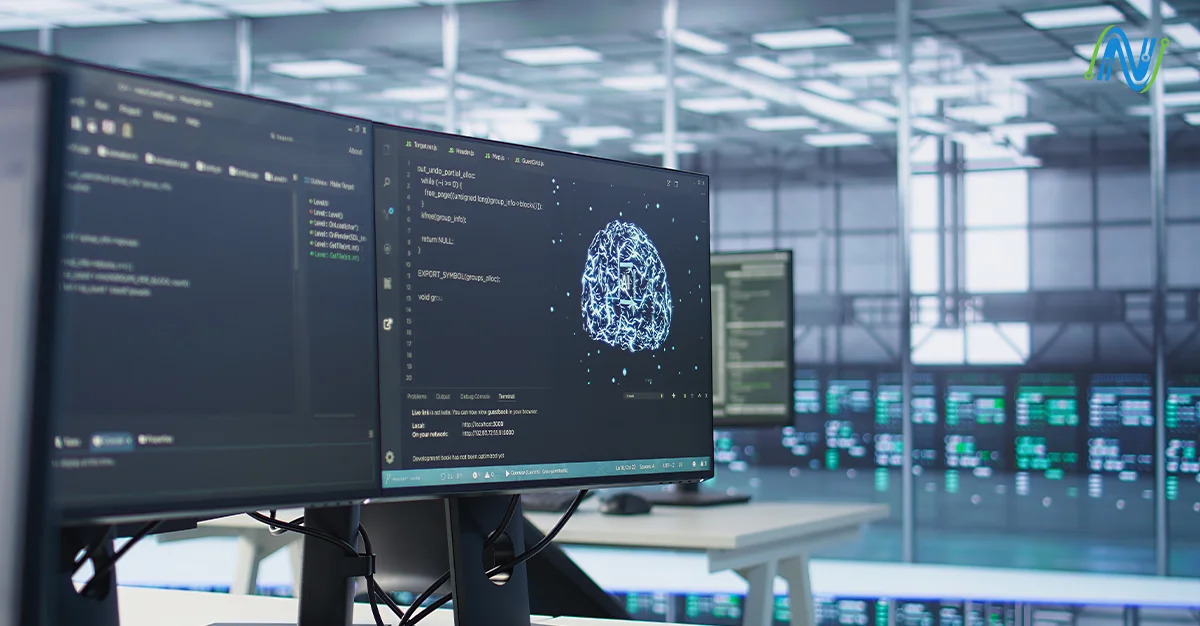
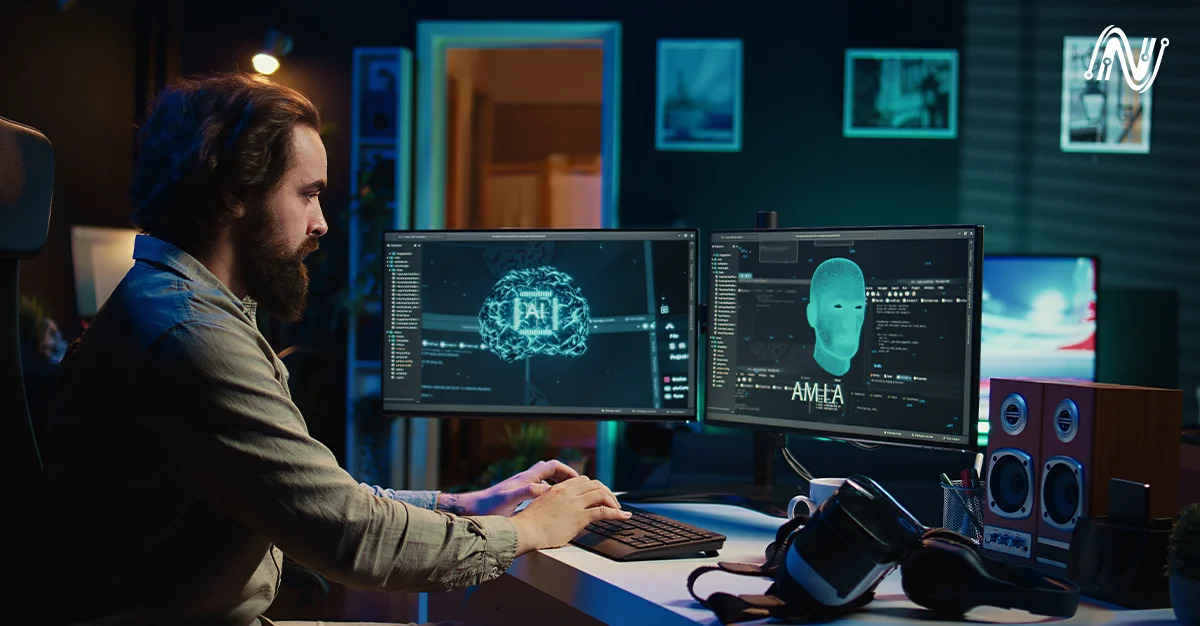
Artificial intelligence (AI) has been implemented in almost all sectors, including health, finances, and customer service. The most controversial question in the technological industry is: Can AI fully substitute software development?
Having AI tools such as GitHub Copilot, ChatGPT, and Tabnine write code, debug, and sometimes even propose whole functions, the question many people ask themselves is whether human programmers are necessary any more. The reality is more nuanced. We shall examine the nature of AI influences on software development, where AI has excelled, where it has failed, and where AI could go.
The emergence of AI in software development.
In recent years, AI-driven applications have been critical in accelerating the software development life cycle. Developers now use AI for multiple tasks such as:
Code Generation: AI systems are able to produce boilerplate code or even more complicated functions.
Bug Detection: AI models are more efficient in identifying vulnerabilities, compared to manual reviews.
Automation of testing: Machine learning increases the quality of test coverage and efficiency.
Project Management: Predictive analytics assist in teams to estimate the timelines more precisely.
Indicatively, GitHub Copilot, which uses the Codex by OpenAI, has been demonstrated to have increased developer productivity by up to 55 percent by its own research. The developers are now able to work on architecture and design as opposed to recurrent jobs.
Will AI Take over Human Developers?
The answer to this question is: not entirely. AI is mighty, yet does not have critical aspects that humans introduce into the picture. Software development is not only about writing code, but is also a solution to problems, comprehending the needs of the business, designing systems and making sure that technology is used ethically. This is the reason that AI will not be able to completely substitute developers:
Contextual Understanding
AI creates code using patterns, yet it does not have any real understanding of the issue. As an example, when a business requires a tailored supply chain system, AI will be able to create fragments of the code but it will not understand the business logic unless it is described by humans.
Creativity and Innovation
The creation of such innovative apps as Uber, Airbnb or Tik Tok presupposed the imagination and creative solutions of human beings. AI is not an innovator, it is an imitator.
Ethics and Responsibility
AI will propose code which can contain flaws in security or biased logic. Human beings are required to make sure that there are ethical, legal, and safe practices.
Building Business Partnerships
Developers collaborate with the clients, managers and designers. Human communication, empathy and negotiation cannot be substituted by AI.
Case Studies: AI in Action
Case Study 1: GitHub Copilot in E-Commerce
GitHub Copilot was tested by a large e-commerce company in 2023 to accelerate the development process. The results were impressive:
Improved Productivity: Developers said they got 40 percent faster at the standard coding jobs.
Minimal mistakes: AI generated code minimized syntax errors and enhanced consistency.
Disadvantage: Developers found that Copilot tended to produce old or unsafe pieces of code which needed to be checked manually.
Conclusion: AI is a good aid but it still requires the management of humans in order to guarantee quality and safety.
Case Study 2: Artificial Intelligence Testing in Banking.
One multinational bank used AI-powered testing tools to make their mobile banking application reliable. With the help of machine learning models:
Coverage of testing increased by 70 per cent over manual testing.
Speed of Bug Detection had been doubled avoiding the expensive downtime.
Problem: The neural network occasionally tripped on non-critical problems, and wasted time.
Lesson learned: AI made the process more efficient, but needed human intuition to generate more refined outcomes.
The Future of AI in the Work of Developers.
AI is transforming the work of developers as opposed to eliminating it. The developers of the future will be able to save time on typing the code and more time on:
System Architecture: Optimized, scalable and secure systems.
Issue-Solving: Converting high level business requirements into technical requirements.
AI Supervision: The evaluation, revision and training of AI models to generate more desirable code.
Innovation: Creating the applications the AI is incapable of imagining.
That is, developers will grow to be strategists, architects, and innovators but not code typists.
Small Business Software.
In case of a small business that desires a tailor-made customer relationship management (CRM) system.
Both with AI Tools: The owner may create a rudimentary CRM via low-code or AI-assisted systems.
With Developers: A group of developers will be able to customize the CRM with sophisticated analytics, integrations, and personal workflows depending on the business.
This example demonstrates the ability of AI to deal with the fundamentals and yet human expertise is needed to customize and innovate.
Will There Be an End of the Entry-Level Jobs?
Among the issues is the question of whether AI will result in the removal of low-tier programming positions. Although AI is able to cope with repetitive coding, entry-level developers are also vital:
Knowledge of the Basics: Developers should have actual projects to acquire problem-solving skills.
Sustaining AI Code: AI code can be refined by junior developers.
Team Collaboration: Sometimes, the role being addressed is that of helping larger teams through testing, documentation, and maintenance.
AI will decrease the quantity of simple coding positions, yet it will generate some new positions such as AI instructors, provoke engineers, and ethical AI managers.
The Future of AI and Software Development.
In the future, AI will only continue developing and become an indivisible component of the software industry. Nevertheless, instead of posing the question of whether or not AI is going to kill software developers, it is more appropriate to ask: How will developers and AI cooperate?Here are some predictions:
Hybrid Development: The teams will be based on AI and human knowledge.
Low-Code Platforms: Non technical users will be able to create with AI, although complicated projects will require professionals.
AI-First Companies: Companies will use AI-driven tools as the new standard, just as cloud computing ended up being a mainstream.
Tighter Policies: Governments can come up with policies related to AI-generated code to guarantee security and ethics.
Conclusion
The field of software development has already been changed by AI and it will further redefine it. Applications such as GitHub Copilot, ChatGPT and automated testing tools make coding efficient, smart and quicker. Nevertheless, AI will not be able to completely replace human developers.
To come up with a software, it is not only about the code but also about creativity, context, ethics, and problem-solving. The future is not the case of AI causing the developers to die but rather the case of having developers who are knowledgeable and wise enough to apply AI wisely.
Whether you are a business looking to speed up development, or a developer eager to harness AI tools like GitHub Copilot and ChatGPT, the future lies in collaboration between humans and Artificial Intelligence. With Nodesol Corp you can explore how AI integrates into your projects while keeping the creativity, ethics, and problem-solving power of human developers at the core.