
In the digital-first era, users also demand more than just useful apps. They desire experiences that are personalized to their needs, preferences and behavior. That is where machine learning (ML) fits in.By using Machine Leaning app developers in New Jersey can transcend one-size-fits-all and provide personalized user experiences, which brings higher levels of engagement, retention, and satisfacti
This article examines the ways machine learning can revolutionize the process of app personalization, how it works, and how businesses can use the power of machine learning.
The Benefit of Personalization in Apps.
Personalization is no longer a luxury, it is a need. Surveys have shown that over 70 percent of consumers will prefer a brand with personalized experiences. In the case of mobile and web apps, it implies personalizing content recommendations, in-app features, and more on the basis of user-specific information.
Unless personalized, apps can easily be generic and unmemorable. There are also applications that can be adaptive, intuitive, and even nearly predictive with personalization driven by machine learning, anticipating what the user desires before the user can even query.
How Machine Learning Enhances Personalization?
Machine learning provides apps with the capability to learn and get better with time. ML models are built on the analysis of tendencies in user behavior, preferences, and interactions, rather than using fixed rules or assumptions, to provide dynamic and relevant experiences. These are some of the main ways machine learning can enhance the personalization of the apps:
Behavioral Insight and Predictive Intelligence.
ML algorithms are capable of working with very large volumes of behavioral data, such as the time spent on various allotted features in the app, history search and clicks, and buy or window shopping behavior.
Through such data, the app is able to forecast the next action to be taken by users. As an illustration, an e-commerce application can suggest the products that the user may wish to purchase, whereas a fitness application may suggest exercising that user does depending on previous activity.
Real-Time Recommendations
Recommendation engines can be considered one of the most widespread uses of Machine Learning. Imagine Netflix recommending movies or Spotify assembling playlists. Such real-time suggestions are not accidental; they are created by the ML algorithms that analyze user interactions, match them with other similar users, and provide them with the personalized suggestions immediately.
Adaptive User Interfaces
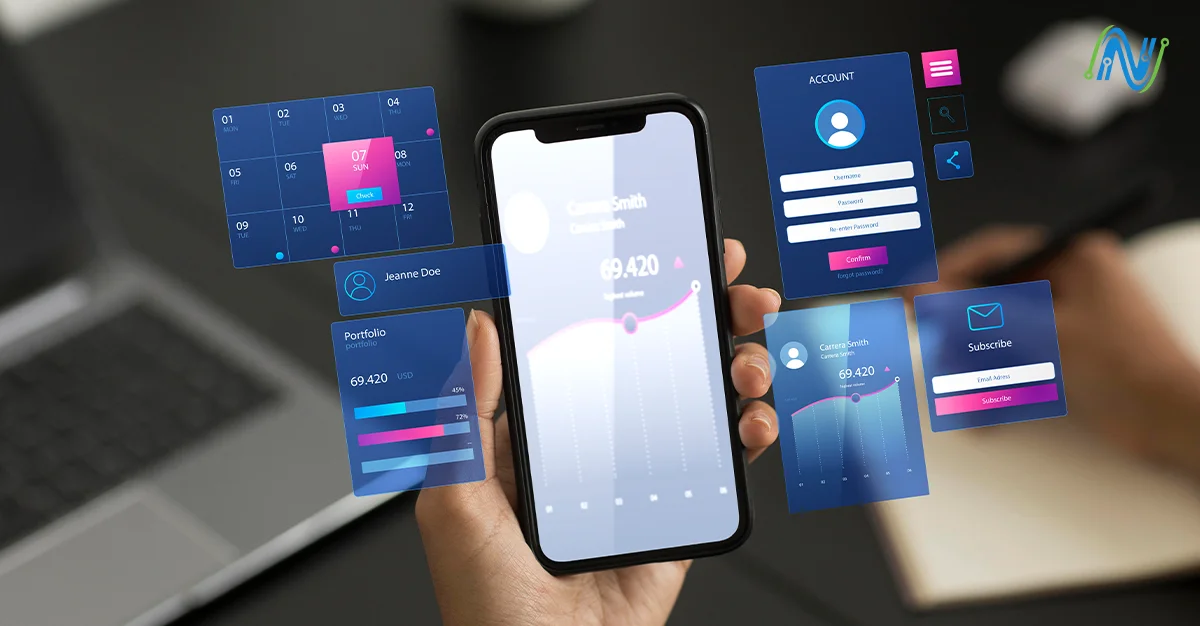
Machine learning enables applications to change the interface in response to personal preferences. As an example, the app can prioritize some of the features that a user uses regularly. This provides a more user friendly, intuitive interaction without necessarily having to customize the interaction manually.
Better Customer Segmentation.
The classical types of segmentation will tend to categorise users about their demographics. Machine learning is more profound in that it helps to find the unseen trends in behavior. It will have the ability to build micro-segments of users that have similar habits to run hyper-personalized marketing campaigns and roll out features.
Context-Aware Personalization
ML can include such contextual information as location, time of day or even weather. For instance: A food delivery application can suggest hot drinks on a cold morning. A travel application may recommend local places of interest when a user enters a new city. This context-driven customization renders the app smarter and more relatable.
Real-life Application On App Personalization using machine learning.
In order to learn more about its effects, we can take a closer look at how top apps are leveraging machine learning to personalize experiences:
Spotify: Custom playlists: Minimally invasive playlists such as Discover Weekly are generated by examining listening history and comparing it across millions of users.
Amazon: Recommendations: Amazon uses ML to give recommendations on products, the recommendations are adjusted based on what the user is looking at.
Duolingo: Changes the course of language lessons in accordance with the advancement of a learner and his/her frequent errors, which guarantees the presentation of the learning curve.
Instagram: It uses ML to personalise every feed of users, focusing on the content that is most likely to result in an engagement.
These are just some instances that show that personalization, with the help of ML, is already an effective method of increasing engagement and loyalty.
Advantages of Personalization with the help of Machine Learning.
Machine learning based personalization can bring several app developer and business advantages when it is done correctly:
Higher User Engagement
Customized suggestions and experiences will make users return. They will be more likely to be involved with features that match their interests.
Increased Conversions
Individualized recommendations increase the rate of conversion. In the case of e-commerce applications, it may imply increased purchases; in the case of media applications, increased viewing time.
Improved Retention
When users are made to feel understood and valued, they are less likely to quit using the app since personalization will develop stronger emotional connections.
Smarter Business Decisions
The intelligence of the ML models is not only useful in enhancing personalisation, but the business will use the obtained data to identify trends and streamline their business plans.
Difficulties in the application of machine learning personalization.
Machine learning enables computers to learn from data, uncover patterns, and make predictions or decisions without being explicitly programmed. But beneath its promising facade lies a maze of difficulties and limitations.
Data Protection Issues: The gathering and the analysis of personal data should be in line with such regulations as GDPR or CCPA. Security and transparency are of the essence.
Learning algorithms: ML models need to be constructed with a background in data science and creation. This is a barrier that is addressed by many businesses using pre-built ML services.
Data Quality: Data of low quality or inadequate data may cause inaccurate personalization. There must be clean, reliable and diverse datasets.
Resource Intensity: ML processes are sometimes computationally expensive, and must be properly supported by infrastructure and investment.
It is necessary to plan to overcome these challenges, yet the rewards of the long term will usually compensate for the initial effort.
The Future of Machine Learning-based Personalization of Apps.
Personalization will continue to get even more advanced as ML technology advances. In the future, applications can be built to integrate machine learning with natural language processing with computer vision and even emotion analysis to provide experiences that are unquestionably human.
Suppose applications that are able to change tone, imagery, and capabilities, not only according to your actions but also your feel and surroundings. The boundary between human intuition and machine-based personalization will only be further blurred and will provide new levels of engagement.
Final Thoughts
Machine learning in app development is no longer an experimental feature, it is becoming the standard for delivering meaningful user experiences. By enabling mobile and web app personalization, ML helps to transform ordinary platforms into smart, adaptive, and engaging tools. From predictive recommendations to context-aware interactions, personalized apps not only keep users satisfied but also drive higher engagement, conversions, and long-term loyalty.
For businesses and app developers in New Jersey, leveraging machine learning means staying ahead of the competition while meeting the rising expectations of digital-first users. Although challenges like data privacy, infrastructure, and model complexity remain, the benefits of smarter, personalized experiences far outweigh the obstacles. As the technology continues to evolve, we can expect mobile app personalization and web app personalization to become even more precise, intuitive, and human-like.
Take your mobile and web app personalization to the next level. Contact us today at Nodesol Corp to discover how machine learning in app development can help you create adaptive, user-friendly, and engaging experiences. Connect with our skilled app developers in New Jersey to get started.