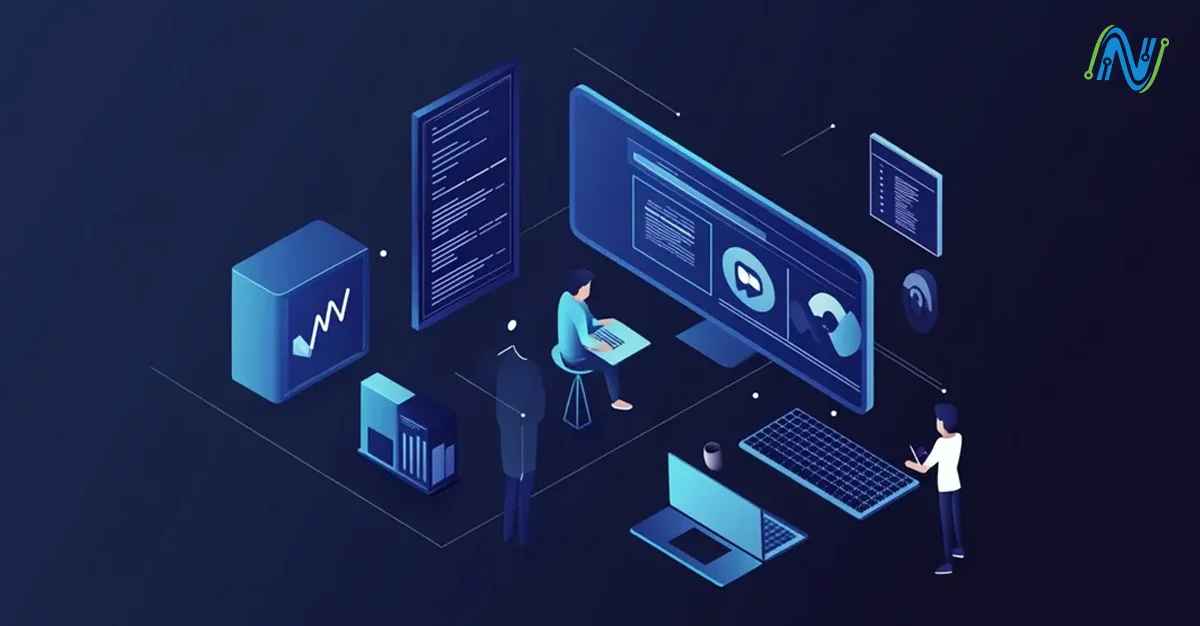

The DevOps life cycle is software development’s start-to-end path using DevOps principles. The DevOps lifecycle is an ongoing and iterative process that creates integration and collaboration between software development (Dev) and IT operation teams (ops). The basic purpose is to streamline the development and delivery process, and more reliable releases to maintain a high level of quality of web developers in USA. The life cycle is commonly represented by the infinity symbol because DevOps is a methodology centered around continuous improvement. The first round includes plan, code, build, and test the activities of the Dev team, the second round consists of release, deploy, operate, and monitor the activities of the Ops team. By adhering to these phases and selecting suitable tools and practices teams can optimize their development, delivery workflows, release updates, add new features, and bug fixes during the application life cycle. In reality, there is no end point but an application’s life cycle stops when your organization decides to end support. The stages of the Life cycle are explained below
Plan
As its name suggests, this stage involves planning the life cycle of any custom app development. In this stage, the web developers in the USA arrange meetings with the stakeholders to discuss the application's requirements and perform basic tasks to create the application. In this stage, web developers plan the Project timelines, tools, technology, programming language, resource optimization, and risk reduction. The basic aim of this stage is to understand the stakeholders' requirements.
Code
The web developers will create the code for the application. Developers will write high-quality and maintainable code that can be easily tested. A version control system, such as Git, is used by top web developers, to manage the codebase and facilitate teamwork.
Build
This phase includes tasks such as compiling code, running unit tests, and packaging the application. When the new code is ready, it is time for developers to integrate code changes into a shared repository, ideally multiple times a day. Continuous integration (CI) plays a vital role which making sure that any integration issues are detected and solved quickly. So the codebase is always in a consistent and working state. Once the web developers deliver a code and the lead developer approves, the CI process is responsible, for initiating the build process. The CI server will maintain the source code into low-level machine code that can be executed. Continuous Integrated tools also identify the dependencies, such as external libraries, frameworks, and modules required for the code to run properly. The output of this build process is a “build artifact,” an executable and deployable form ready for testing.
Test
In web development services it is a critical stage, the application is tested to confirm that it fulfills the quality standards and requirements. A wide range of tests are performed to validate all aspects of the application including functionality, performance, and security.
Automated testing is key to DevOps as it enables faster and more reliable verification of code changes, reduces manual effort, and facilitates continuous integration (CI) and continuous delivery (CD). This includes testing at different levels, such as unit tests, integration tests, and system tests.
- Unit testing is used to prove the functionality of individual units of code.
- Integration testing is used to verify the flow of data between different code units or components, ensuring that they communicate effectively with each other.
- System testing is used to test user interaction in an environment as closely related to the production environment as possible.
To automate these tests, a software development company in the USA usually has to choose between two options: either creating automated test scripts on their own using test automation tools like Selenium and Appium, which needs a certain level of technical expertise, or investing in an automation testing tool that offers low-code test-script creation. After test execution, there should be detailed reports of the test results, providing in-depth insights into which tests passed, failed, and if any issues were discovered. The results from these test sessions should help web developers in the USA to solve these problems quickly.
Release
In this stage, the application code has been verified and a last check for production readiness has been performed. If all requirements are met and any identified issues are resolved by the web developers the project leads to the deployment stage. By conducting the test, the quality assurance team and software development company in the USA can ensure that the launched application meets quality standards and is ready for end-users to utilize.
Deploy
The code has been tested in detail, available for users, and deployed to many environments including production, User Acceptance Testing (UAT), and staging environments. The application is now available for users to access and interact with, but the level of access differs for each.
- The staging environment known as a preproduction environment, is a nearly replica of a production environment for application testing. These environments bridge the development environment with the production environment, providing a preview of how the application works and ensuring it aligns with stakeholders’ expectations.
- The UAT environment is where the code is deployed after software testing is completed on staging. It is also a near-exact replica of the production environment, but customers or product owners perform testing here instead of the Quality Assurance team.
- The production environment is where the final deployment is done. Known as the live environment, all customers can interact with it in real-time. During this stage, bugs are not expected to be found. However, if a bug is discovered, the QA staff will immediately be alerted.
Automated deployments are very helpful in creating a smooth flow, simplifying the deployment process, and minimizing human mistakes. Additionally, it is essential for continuous deployment, where application changes are automatically pushed to production environments after they pass automated testing.
Operate
Once the application has been deployed, it moves into the operational stage, where the software development company in the USA can utilize it without any restrictions. The application is monitored and maintained in the production environment. Web developers in the USA monitor the application’s performance, availability, and security, and respond to any incidents or issues that arise. Ideally, the top software developers use monitoring tools to collect and analyze real-time data from all components of the software stack, including servers, databases, networks, or application metrics to be constantly updated on its health. If any deviant behavior is detected based on a preconfigured approach, these tools can send alerts to web developers so that they can be proactive in resolution. This stage also involves capacity management, ensuring that high volumes of users can access the application.
Monitor
In this stage, software developers monitor performance, tracking user behavior, troubleshooting issues, and providing feedback. This information is then conveyed to the subsequent iteration to aid in the development process. This phase is essential for planning the next iteration and streamlining the pipeline’s development process.
Conclusion
The DevOps life cycle is a continuous software development process that ensures seamless collaboration, enhanced productivity, and improved software delivery. By adopting DevOps principles, web developers and web development companies in the USA can streamline the planning, coding, building, testing, deployment, operation, and monitoring stages of application development. Each phase in the cycle plays an important role in maintaining a high-quality, user-centric product, from understanding stakeholder needs to deploying robust and secure applications. By leveraging this life cycle, web development teams can deliver innovative solutions that align with organizational goals and meet users' expectations effectively.
If you are ready to embrace the future of software development. At Nodesol Corp our expert team of software developers will discuss with you the application development that can transform your business. Contact us today to discuss your application’s requirements and receive a top-grade response.